Taken Part 4: South St. Paul Teen Balances Graduation, New Responsibilities After Dad’s Deportation To Laos
By Katelyn Vue
This story comes to you from the Hmong Times’ partnership with the Sahan Journal, a nonprofit newsroom dedicated to covering Minnesota’s immigrants and communities of color. Sign up for a free newsletter to receive Sahan’s stories in your inbox.
Yaay Prepares For College
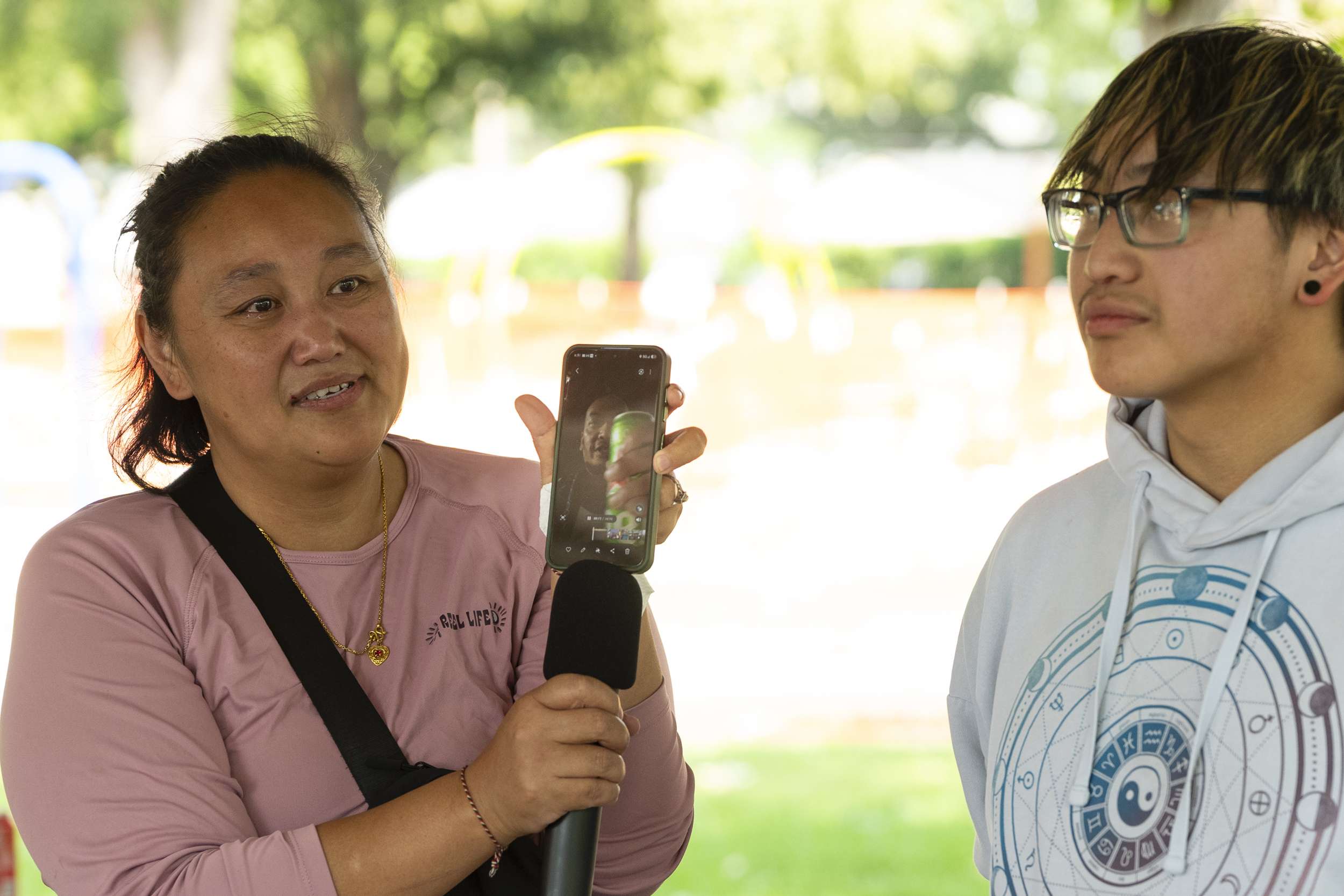
After Zong’s toast, Linda passed the microphone to Yaay, who was caught by surprise, told the guests he plans to attend Winona State University this fall and study chemistry. “I’m just going to go and see what life has planned for me,” he said, holding tightly onto the microphone as he nervously glanced at the ground. “You got it, baby!” his maternal aunt, Pa Houa, shouted.
Yaay graduated on June 4, walking across the stage in his red cap and gown as his dad watched live on WhatsApp through Linda’s cellphone. Zong, who didn’t attend college, always reminded his children to focus on education.
Yaay walked with about 200 high school seniors. He wore a red stole with a Hmong design of the elephant foot motif and his name written in Hmong, “Yej Yaj.” Some of the student and teacher commencement speakers briefly addressed the federal immigration operation that rippled across Minnesota from late 2025 through early 2026.
“It is a city built on the backs of immigrants, and it continues to be a community where we are strengthened by our immigrant families,” student speaker Jackson Schultz said about South St. Paul.
Yaay was one of the last students called on stage. Linda zoomed in on him to give Zong a better view. Linda’s sister, Pa Houa, and Zong’s cousin, Mai Zoua Vue, cheered loudly.
“It’s emotional,” Linda said at the graduation ceremony. “I know his dad wanted to be here; it’s another one of those bittersweet moments.”
Yaay, filled with a mix of excitement and nervous energy, found his family when the ceremony ended. “It’s the first time that my life’s not really being directed by going to the next school grade,” he said. “It’s going into college and moving up and living on my own. It’s adulting, basically.”
Yaay smiled happily for photos, holding a bouquet of flowers and a string of balloons. He’s relied on close school friends to cope with his dad’s deportation.
“It is a big accomplishment and obviously with all this stuff going on, I wish my dad was here to witness me do this, and just be here with me in this moment,” he said. “Being able to make my parents proud and being able to live up to their expectations, even how basic it is, it’s still heartwarming.”
More than 7,000 miles away, Zong watched from Laos at about 8:00 a.m. as Yaay walked across the stage at 8:00 p.m. Minnesota time. “It was just happy to see people that still love us to go support even though I wasn’t there,” Zong told Sahan Journal in an interview later, his voice cracking. “It was hard, but it’s just something that I was happy to see.”
He hopes to find ways to still be a part of his sons’ lives during big and small milestones. “I hope that as they get older, they will understand the whole situation,” he said. “I hope that they do not hold on to say that I left willingly, that you know, that I had a choice, and I just went. That’s what’s going to hurt me the most.”
Not Dead, But Gone
Yaay’s maternal grandfather, Nhia Ying Lo, 67, also gave a speech at Yaay’s graduation party, telling Linda to have a big heart, and that she has a family to rely on. He bent over and cried into his hand at times, overcome with emotions.
Nhia Ying told Sahan Journal in an interview that what happened to Zong is unfair, given how the United States enlisted Hmong allies to fight in the Vietnam War.
The United States started to recruit Hmong men and boys in 1961 to fight in a CIA-backed operation against Vietnamese communists. An estimated one-fourth of the Hmong men and boys who were recruited died in service, according to the Minnesota Historical Society.
Following the end of the Vietnam War, Hmong people fled political persecution prompted by their alliance with the United States. Many ended up in Thai refugee camps. Many Hmong, including Zong, were born in the camps and later immigrated to the United States.
That generation of Hmong people don’t know the Lao culture or language, Nhia Ying said, and only have familiarity with the Hmong community in the United States.
“Why would they take people like this, with access to jobs, to go live in Laos? They know we are people who don’t know anything [in Laos],” he said.
When it was time for her speech, Yaay’s maternal grandmother, Chong Lo, 65, stood in front of him, one hand clasped over his shoulder. “Help each other,” she said in Hmong. “Love your mom.”
She cried every time she talked about Zong, or heard his name mentioned at the party. “I want people to see this, to know what the pain is like, that his life – he’s not dead, but he’s gone,” she said in an interview.
She pressed a tissue to her nose. “For a family to actually survive this, the parent with the children has to work double – double shifts,” she said, crying so hard she could barely finish her sentence.
Seeing Yaay and Kenji helping Linda gives her some relief, she added. Linda’s sister and brother, Pa Houa and John Lor, who live in Minnesota, regularly visit the Yang family to help with the children.
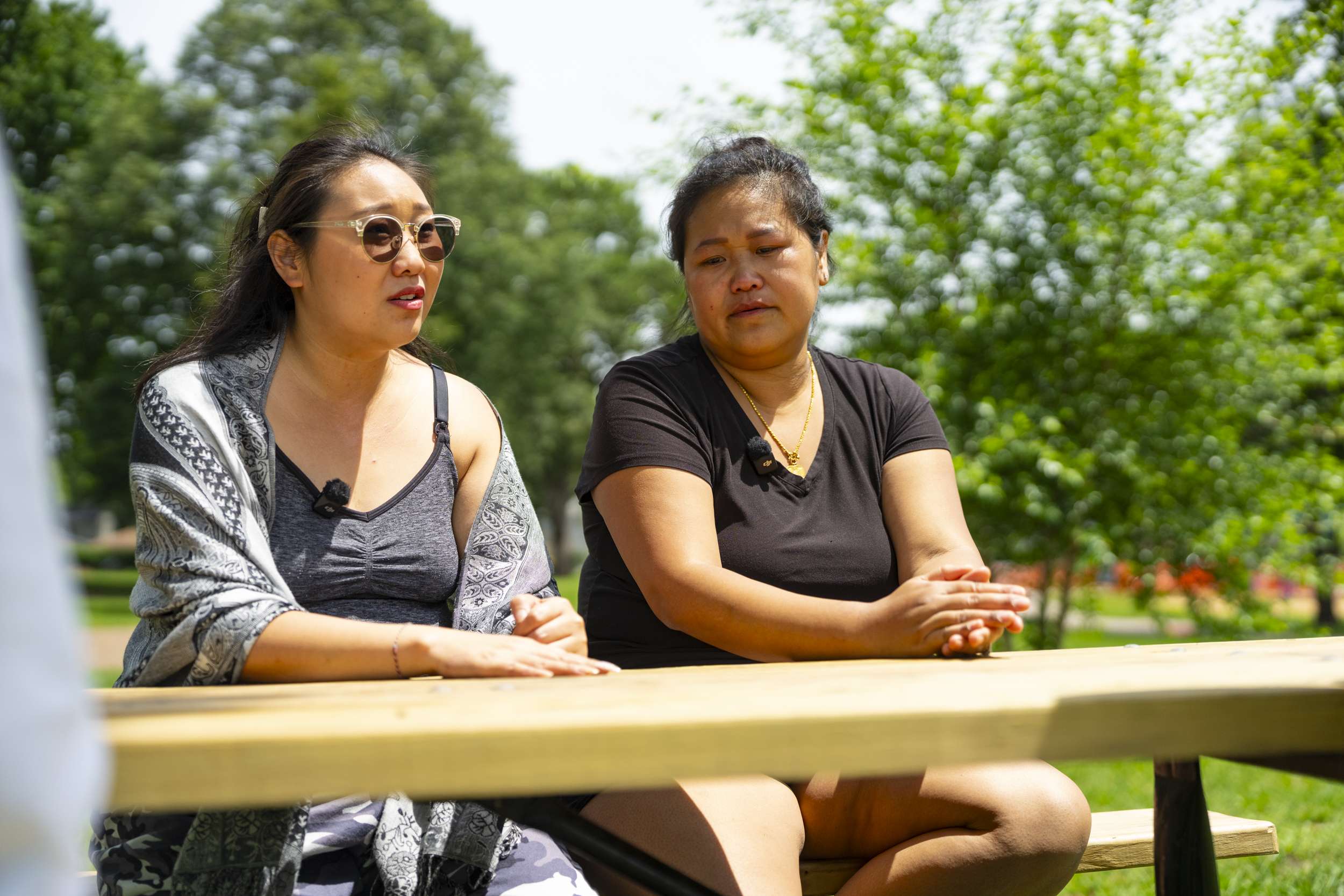
“We’re never going to be able to replicate his dad, but we’re here to just show our love and support in every way possible, because he’s [Yayy] as much as our son, and that’s [Zong] as much as our father as well,” Pa Houa said. “It’s good to see [Yaay] pass his milestone, but it’s also a little bitter because you wish everyone could join you.”
Most of their family members were playing volleyball when Yaay and King returned to his graduation party after a 10-minute absence to change King out of his muddy clothes. Yaay let go of King’s hand. King took a few steps and glanced back at Yaay with a look of uncertainty on his face. “Go,” Yaay said softly, motioning to the playground.
Dozens of relatives from both sides of the family awaited them. “Seeing everyone here,” Yaay said, “it’s nice, and I think I also needed this – just to see all the people who are there to back me up, and help me, and just give me something to work for and not fail.”
Continue following the Yang family’s story in the next issue of the Hmong Times.