People Are Choosing To Walk, Bike, And Take Transit. Here’s Why.
By: As You Go MPLS – minneapolismn.gov/as-you-go
Across Minneapolis, people are juggling work, errands, school drop-offs, and full schedules. Transportation plays a big role in how each day unfolds. As the City and regional partners improve sidewalks, bike routes, and transit service, more people are choosing options that help them move through their day with less stress and more joy. We caught up with two Minneapolis residents and asked them to share about how they move around the City – and why they choose to walk, bike, and take transit.
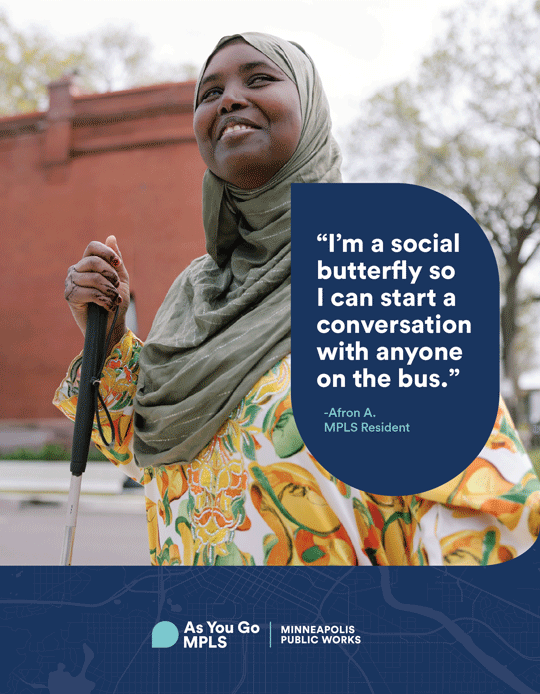
Afron lives in South Minneapolis. She usually walks and rides the bus to get around: “I can’t drive, but using the bus as a blind person allows me to get out and explore the city and go places I otherwise wouldn’t. I do take rideshare, but my favorite is the city bus.”
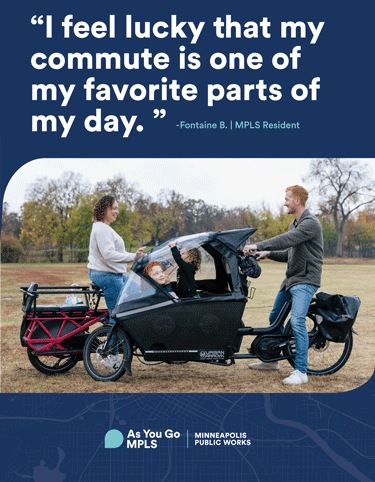
Fontaine is a Minneapolis resident with family of four. Her family has one car and nine bikes; biking is their primary way of moving around.
Reducing Cost
Transportation costs add up quickly. Gas, parking, insurance, and car maintenance all put pressure on a budget.
If Afron doesn’t take the bus, her alternative is taking rideshare, which is far more expensive than the bus fare. For Fontaine, biking enables her family to have one car instead of two, meaning they can afford things that they otherwise wouldn’t be able to. What happens when their only car is in the shop? The family takes the bikes. Fontaine shared, “Since our car is supplemental to our way of getting around rather than the primary way, we are still able to get to work, school, and all the other places we need to be without a lot of stress.”
Avoid Parking, Traffic, And Extra Hassle
Walking, biking, or taking transit means avoiding with the stress of circling the block or parking lot to find a parking space. You can walk, or roll, right up to your destination. The difference is particularly clear when traveling with kids: “One of our favorite things to do is bike to different playgrounds and make different stops along the way – from coffee shops, to bookstores, to ice cream shops.” Fontaine can skip time-consuming steps like unbuckling car seats and loading in and out of the car because they’re riding the bike. And when Fontaine sees a friend or neighbor on the way, she can easily stop for a quick hello.
More Joy And Connection
Aside from saving time and money, there’s something both Afron and Fontaine said they gain: joy and connection. One of Afron’s favorite things is experiencing the beauty of her neighborhood up close. She shared, “Minneapolis is walkable and the residents do a great job of keeping up with the plants they have, and so you can smell nice scents of flowers on your walks.”
For Afron, taking transit is also social: “I think riding the bus encourages people to interact with each other in a time where people are isolated which is great for one’s mental health. I’m a social butterfly, and so I can start a conversation with anyone on the bus. Even if we aren’t going to meet again.” If you’re more introverted than her, you still might find joy in seeing connections being made and riding alongside your neighbors.
As we heard from Fontaine earlier, she also finds it easier to interact with neighbors while biking. It’s also easier to connect with her kids: “Some of [our] best conversations have been when we’re heading somewhere by bike.”
When we asked Fontaine what makes her choose to bike, she said the simplest reason is feeling better when she arrives at her destination on a bike. In her words, “My mood is always brightened riding my bike, even on the most stressful of days. I have never regretted choosing to bike some place, but I have had times where I regretted driving.”