Major Pa Blia Vang: A Life Of Service, Sacrifice And Leadership
Hmong military leader and Secret War veteran remembered for his courage, service and devotion to family.
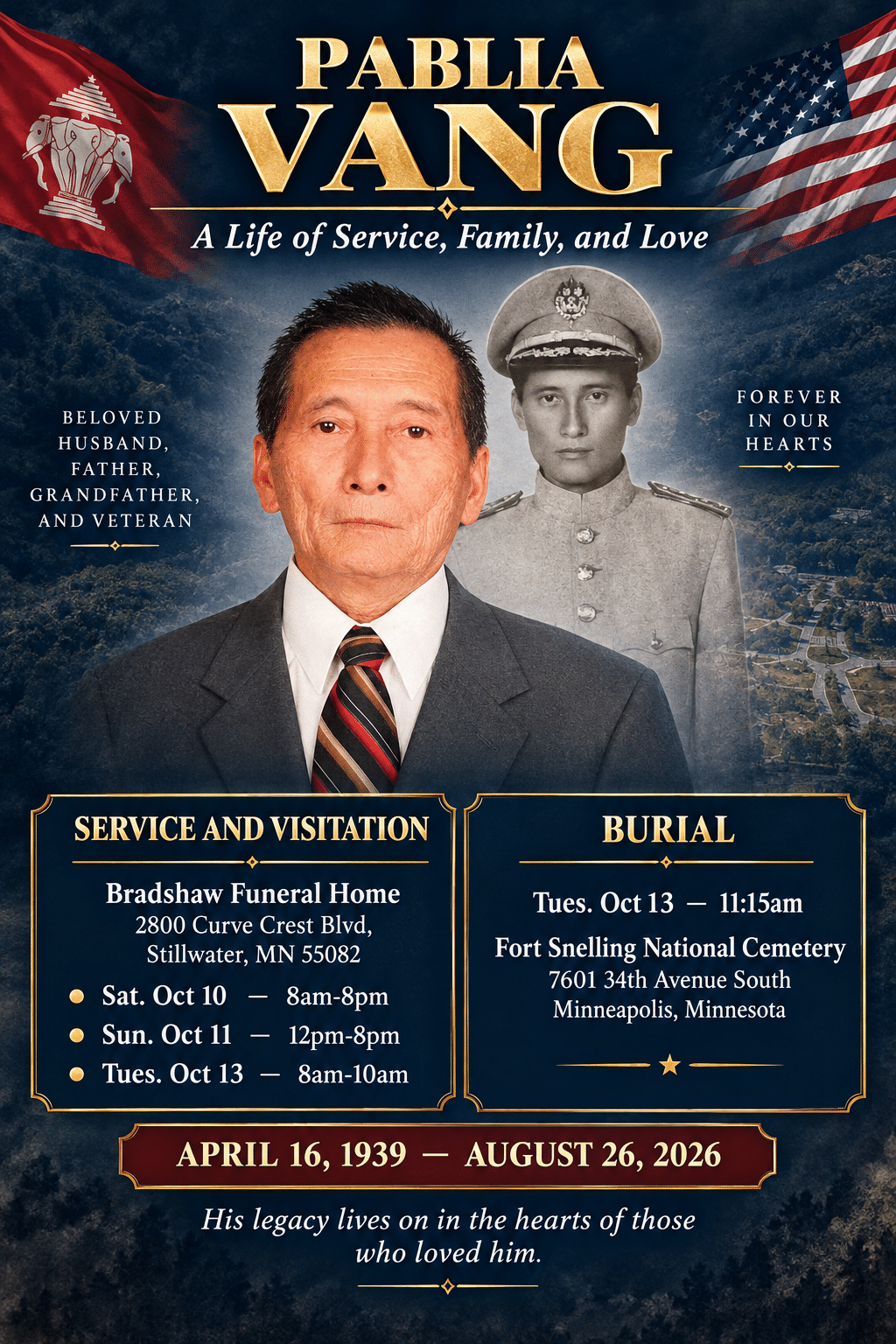
April 16, 1939 – August 26, 2026
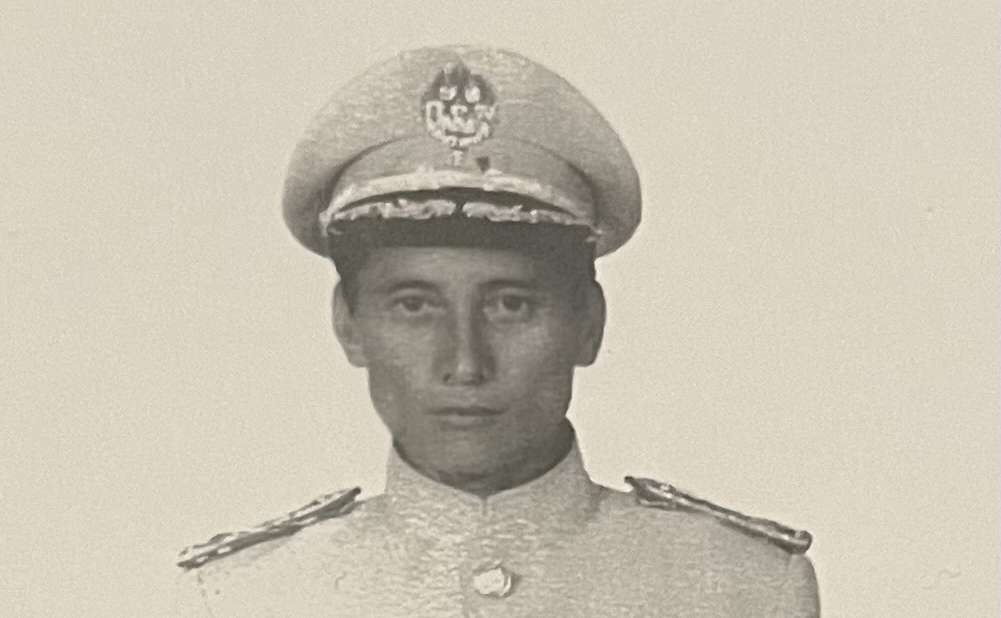
Major Pa Blia Vang, a longtime Hmong military leader who rose from a young village defender to command battalions during the Secret War in Laos, died peacefully on August 26, 2026, surrounded by his loved ones. He was 87.
His death marks the passing of another member of a generation of Hmong soldiers whose lives were forever shaped by the war in Laos. For Vang, that journey included more than a decade of military service, years of leadership on the battlefield, the loss of fellow soldiers and commanders, and eventually a return to the quiet life of a farmer before making a new home in St. Paul, Minnesota.
Born April 16, 1939, in Mouang Ngat, Xieng Khouang Province, Laos, Vang was the son of Yong Xa Vang and Mee Xiong. He was raised in a large family of six sons and six daughters, spending his childhood helping with farming and household responsibilities.
War, however, was already part of the world around him. During the French Indochina War, his father, uncles and other relatives assisted the French and Royal Lao Government in resisting communist forces. By 1960, as conflict expanded into Xieng Khouang Province, Vang and his relatives took up arms to defend their villages and communities.
In March 1961, Vang was recruited into the Special Guerrilla Units under the command of then – Colonel Vang Pao. Assigned to Company Unit 5 in Mouang Ngat under Zone Commander Nhia Ying Vang, he began what would become a military career lasting until the end of the war in 1975.
His potential as a leader was recognized early. In January 1962, Vang was selected for nine months of formal military and leadership training in Hua Hin, Thailand. His training included military procedures and law, physical conditioning, parachute operations and weapons ranging from small arms to 81mm mortars.
After returning to Laos in September 1962, he was selected as one of approximately 20 soldiers to serve as a paratrooper and jump specialist. Working from C-47 aircraft, he helped deliver rice and other critical supplies to civilians and troops.
From 1963 to 1966, Vang served at Long Cheng, known as LS-20A, where his responsibilities expanded. He served as a team leader, guarded an ammunition facility and helped deliver ammunition and supplies to frontline forces.
As the conflict intensified, Vang continued to rise through the military ranks.
In May 1967, he became 5th Company Commander of the 203rd Battalion in GM 22. His
company participated in major engagements that year, including fighting along Route 6 and at Na Khang, LS-36.
Later that year, General Vang Pao selected Vang for additional military leadership and procedures training at Long Cheng. After completing the training, he returned to the front lines in July 1968 as a 3rd Company Commander.
On May 1, 1969, Vang was promoted to commander of the 203rd Battalion in GM 22, based in Padong. The young man who had entered military service eight years earlier was now responsible for leading a battalion during some of the most difficult years of the conflict.
Beginning in June 1970, his battalion fought in the Plain of Jars. Its mission included defending strategic positions, disrupting enemy advances and supplies, and helping prevent opposing forces from advancing toward Long Cheng.
The battalion’s work also extended beyond combat. Under Vang’s command, his forces helped recover hundreds of civilians from areas affected by the fighting and relocate them to Long Cheng.
His battalion remained in the Plain of Jars until it was among the last units to withdraw.
War also brought profound personal loss.
During Vang’s command of the 203rd Battalion, two of his senior commanders, Colonel Tong Va Lor and Colonel Tongtoua Yang, were killed in combat. Their deaths deeply affected him, but he continued his military responsibilities.
For his leadership and service, Vang received an Outstanding Leadership Medal Award from General Vang Pao and the King of Laos.
In December 1972, he was once again called to command following the death in combat of his uncle, Major Cher Pao Vang. Vang was appointed commander of the 209A Battalion in GM 24 and continued commanding Special Guerrilla Unit forces until the war ended in 1975.
His rise through the military ranks reflected the responsibilities he assumed over those years. He became a Staff Sergeant in 1965, Sergeant First in 1967, Second Lieutenant in 1968, First Lieutenant in 1969, Captain in 1970 and Major in 1971.
Yet Vang’s story did not end on the battlefield.
After the war, he returned to civilian life in Laos. For roughly three decades, the former battalion commander lived quietly, farming and raising livestock to provide for his family.
It was a remarkable contrast to the life he had known during the war. A man who had once commanded soldiers, jumped from aircraft and spent years on the front lines returned to the land and to his family.
In 2007, Vang was sponsored by family members to immigrate to the United States. He resettled in St. Paul, Minnesota, where the final chapter of his life would be defined not by war, but by family and peace.
He spent his later years with loved ones and had the opportunity to watch his grandchildren grow. For a man whose younger years had been marked by conflict, uncertainty and loss, those peaceful years became an important part of his life’s story.
Vang’s life represents more than one man’s military record. His story is also part of the larger history of the Hmong men and women whose lives were transformed by the Secret War in Laos and whose families later rebuilt their lives in the United States and elsewhere.
Like many veterans of his generation, Vang carried memories of a war that younger generations know largely through the stories of their parents and grandparents. His experiences from a young farmer in Xieng Khouang Province to a soldier, paratrooper, company commander and ultimately a Major commanding battalions offer a personal window into that history.
In his own account of his service, Vang did not end by emphasizing his rank, medals or battlefield accomplishments. Instead, after describing years of combat and leadership, he reflected on something more fundamental: how fortunate he felt simply to have survived the war.
That survival allowed another part of his legacy to unfold.
He returned to his family. He lived for decades after the fighting ended. He became an elder and grandfather. And eventually, he was able to see younger generations of his family build their lives in America.
For his family, Vang leaves behind more than the story of a soldier. He leaves the story of a father and grandfather who endured extraordinary circumstances and lived long enough to see a very different world from the one he knew as a young man in Laos.
For the Hmong community, his passing is also a reminder of the importance of preserving the histories of the generation that experienced the Secret War firsthand. As those veterans grow older and pass away, their personal accounts remain an important connection between the Hmong community of today and the experiences that shaped generations before them.
Major Pa Blia Vang’s journey began in the farmlands of Xieng Khouang Province. It carried him through military training in Thailand, supply missions from C-47 aircraft, Long Cheng, the Plain of Jars, Padong and years of battlefield command.
Eventually, that journey brought him back to farming, then across an ocean to Minnesota, where he could spend his remaining years surrounded by family.
He lived through war and found peace.
He commanded soldiers and later watched grandchildren grow.
He witnessed tremendous loss, yet survived to help preserve the story of those who served alongside him.
Major Pa Blia Vang’s military service ended more than half a century ago, but the history he carried remained with him throughout his life. With his passing, that history now belongs to his family and to future generations who will carry his story forward.
Major Pa Blia Vang, April 16, 1939 – August 26, 2026. A soldier, leader, father, grandfather and survivor whose life and service will be remembered.