How To Help Minnesota’s Invaluable Pollinators
By Deborah Locke, Communications Specialist, MN DNR
A few years ago, my neighbor took over a bird feeder in a small flower garden in my back yard. The seed Dave faithfully provided contained sunflower seed. After maybe a year or two of dropped seeds, small and then huge sunflowers grew with massive stalks, attracting bumblebees. Butterflies, too. Day lilies already grew, and eventually milkweed appeared, carried over from Dave’s yard. The modest soil and rock enclave unexpectedly became a plant sanctuary. (The photo shows the garden in its early stage in 2022.)
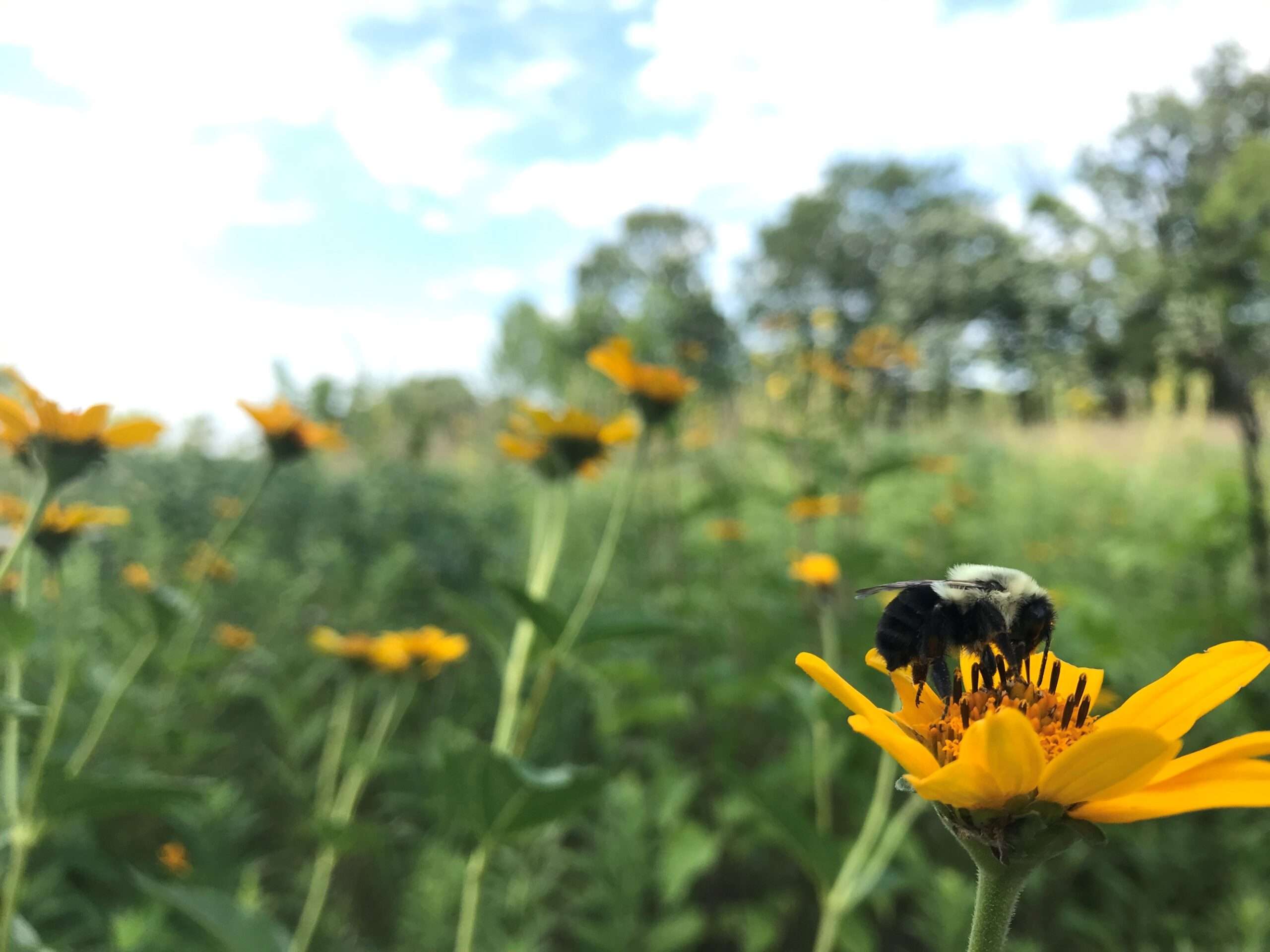
Unlike me, state park and other Department of Natural Resource staff are more deliberate in perpetuating pollinator areas throughout Minnesota. Why? Pollinators – like bees, moths, beetles, butterflies, and hummingbirds – assist many plant species in reproduction by transferring sticky pollen from one plant to the next. The National Park Service reports that at least 75 percent of all flowering plants on the planet are pollinated by animals, which includes 1,200 food crops. U.S. honeybees alone contribute billions of dollars of honey and wax crop production each year.
Yet the number of pollinators has been reduced, through habitat loss, invasive species, pesticides, climate changes and parasites. For example, the state has seen a dramatic decline in the number of rusty patched bumblebees, which was listed as federally endangered in 2017.
That is why staff at 10 Minnesota parks installed educational pollinator plantings with exhibits. The exhibits include the invitation to visitors to become pollinator heroes. The parks are Afton, Buffalo River, Flandrau, Fort Snelling, Lake Carlos, Minneopa, Myre-Big Island, Whitewater, Wild River and William O’Brien state parks. The pollinator exhibits provide an accessible parking spot, bench, and a stand-alone sign with information on the plantings. For general information on state pollinators, go to dnr.state.mn.us/pollinators/index.html.
You may ask, why think about spring planting while we’re in the throes of a serious winter? Good point, but now is the time to think ahead. Christina Locke, a pollinator conservation coordinator with the DNR, said that nurseries throughout the state sell native plants and seeds. If you start from seed, know that they need to overwinter in order to germinate, so she recommends direct-sowing seeds in the fall. I planted seeds in March one year, and they bloomed beautifully in late June. That’s because it was still cold enough at night for the seeds to germinate. If seeds don’t do that the first year, they may do so the second year if they don’t get eaten by critters.
As for location of your pollinator patch, you don’t need a large area. For information, you can start with this webpage: https://www.dnr.state.mn.us/gardens/nativeplants/landscaping_steps.html.
Considerations should include the makeup of your yard, your preferences, your budget, a design, and preparation for planting. Aim to include a variety of native species that bloom in early, mid, and late season to benefit the most species.
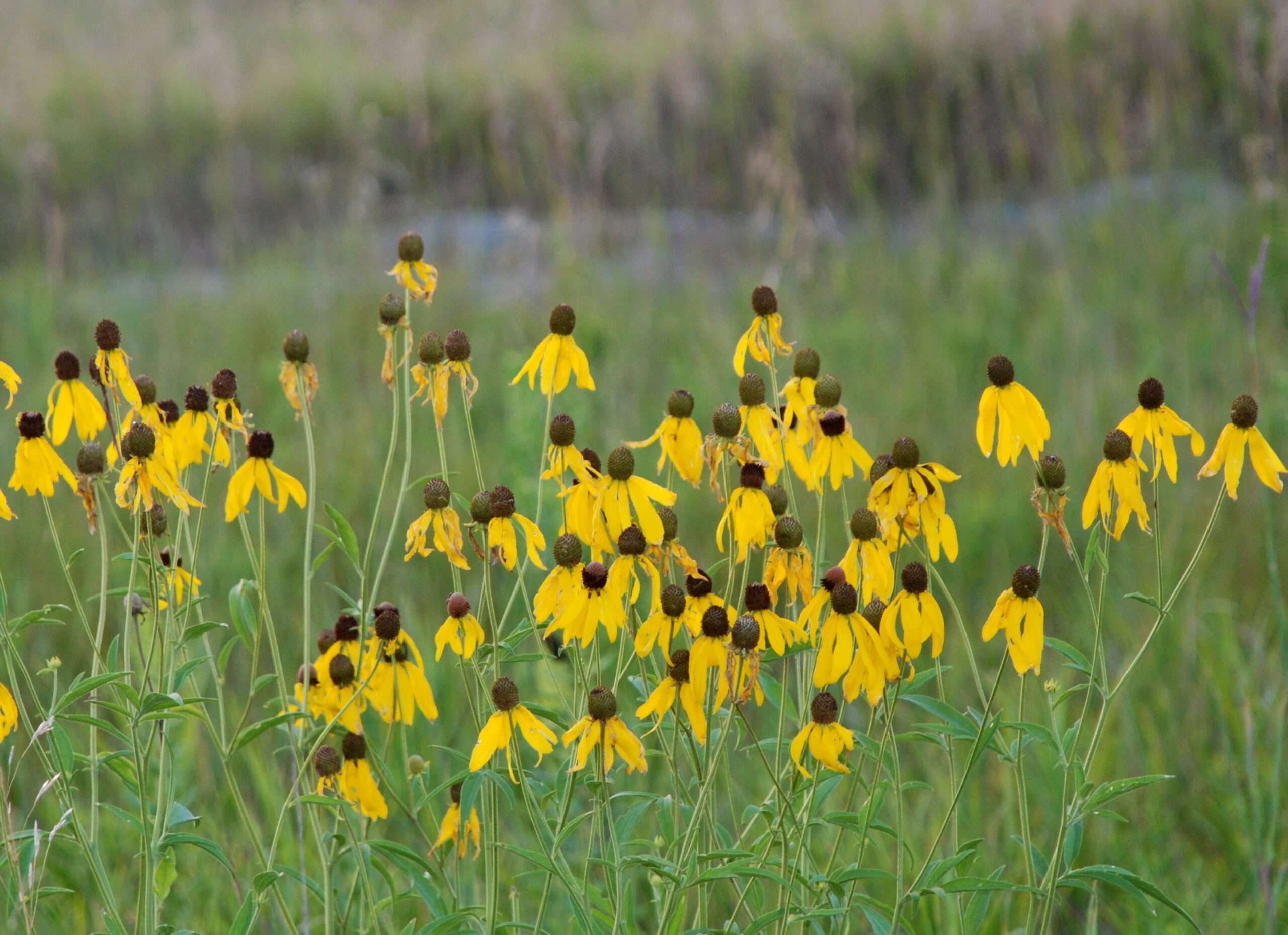
Some native plant species found throughout state parks include wild bergamot, butterfly milkweed, gray-headed coneflower, and many aster and goldenrod species. Trees and shrubs like willows and serviceberries provide blooms during early spring, a critical time for bumble bee queens and some specialist bees. Fallen leaves and native grasses like little bluestem and prairie dropseed provide nesting habitat.
In addition to aiding pollinator species, you’ll be brightening the landscape with plant life that rarely needs watering, mulching, mowing or protection from frost. The deep roots of native plants hold soil and prevent erosion and can help control stormwater by absorbing water that could pour into a street.
Christina the pollinator expert also cited another good reason for growing a pollinator patch. It makes a great hobby. Just a few seasons after starting from bare ground, you can feast your eyes on a small kingdom ripe with color and buzzing with life. If you have children, get them involved. Perhaps as adults they will carry forward your example and aptitude for protection, conservation and the creation of their own tiny pollinator patch.
Images courtesy Minnesota DNR.