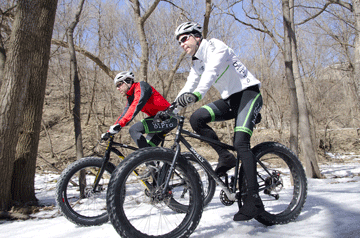
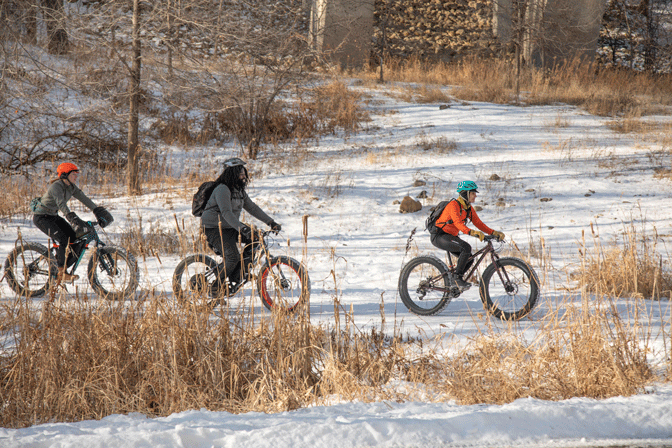
Try A New Family Fun Adventure This Winter: Fat Biking
By Deborah Locke, Communications Specialist, MN DNR
Many know the experience of a bike ride down a state trail. Pumping pedals creates a breeze as scenery zips past.
Ready for a new challenge? Try riding a fat bike on a state park trail or state trail this winter.
“Fat biking is a totally different way to experience trails and your surroundings,” said Shae Rossetti, managing director of the Cuyuna Lakes Mountain Bike Crew, a volunteer advocacy organization.
“It’s a completely different ride in winter,” she said. “You enter an environment when everything is covered with snow and frost. It’s so beautiful.”
It’s called fat biking because bicycles are equipped with lower pressure tires at least 3.7 inches wide. The width allows the tires to move over snow, sand and uneven surfaces that are more challenging for a standard bike tire. This flotation through snow is designed to leave a rut no deeper than one inch.
Those new to the sport may see a groomed trail that looks perfect for a winter fat bike ride, but should check for allowed uses before hitting a trail to make sure biking is allowed. Groomed state park ski and snowmobile trails are limited to those uses because grooming costs on those trails are paid through user fees.
Leading the state in winter with 40 miles of world class fat bike groomed trails is Cuyuna Country State Recreation Area (“Cuyuna”) near Ironton and Crosby, Minn. The popular and unique recreation area was once part of a thriving mining industry and is a two-hour drive from the Twin Cities.
Cuyuna’s trails cater to every level of use, from a beginner who wants to go a half mile to an experienced athlete who easily spends hours on the trails each time out. New signage on the trails provide maps and mileage. Bike repair stations are located in the parking lots, and the City of Crosby is nearby with restaurants and other amenities.
Barry Osborne, Cuyuna supervisor, said someone new to fat bike riding will need a bike, brightly colored winter clothing, and a helmet. Many bike shops rent fat bikes. Barry recommends that visitors call or stop in at the park office to check weather and trail condition, or better yet, call before leaving home. Both staff and volunteers clear the snow-filled trails as quickly as possible, and that can take time.
He added that Cuyuna is a good place for beginners and that the Sagamore Trail, for example, is designed for three-wheel bikes. A new fat bike rider might go a fairly short distance the first time, keeping in mind that speed is significantly decreased when moving over snow.
Here’s another reason for taking up this sport: fat biking is a popular family activity. “We see little kids pushing their Strider bikes along the trail with their grandparents,” he said. “It’s good to see family groups out there.”
“Bikes are for everyone,” Shae added. “Winter fat biking is great for an experienced athlete who wants to try something different, or for a beginner who does a two-mile loop.” She said that the sport teaches patience. Success is not gauged so much by distance covered over the snow but rather by resilience borne by overcoming cold weather.
“There is no such thing as bad weather, only bad gear,” she said. Winter presents a slow, cold environment that forces bikers of all ages to slow down.
“I may be outside for four to five hours at a time but that doesn’t mean I get anywhere far,” she said. Fat bike riders usually build in time for just playing in the snow or stopping at a coffee shop or bar along the way, warming up with a beverage.
The sport conditions both the body and soul, she said, against a backdrop of beauty, silence and camaraderie. The world is quiet, peaceful, and at the darkest time of a winter night, light from the stars and moon light the trail.
Winter Fat Bike Riding Tips
- Before leaving home, check two things: the weather forecast, and the park/trail website for visitor alerts. There is no point in setting out if a blizzard is predicted.
- Vehicle permits are required for state parks and state recreation areas. The cost is $7 per day, and you can get your permit online at mndnr.gov/permit, or at the park or recreation area office. The permit should be displayed on your vehicle dashboard.
- Ride to your ability so you stay in control. Successful winter bike riding requires a slow pace.
- Bring a helmet.
- Test your equipment before leaving.
- Be aware of your surroundings and always yield the trail to others.
- Many Minnesota trails open for fat biking are managed by counties or cities.
For information on those trails, visit Minnesota Off-Road Cyclists at morcmtb.org. Metro fat bike riders can use their bikes at Fort Snelling State Park but fat biking on Pike Island is not allowed. Bronk Unit Plowline Trail in southeastern Minnesota is open for fat biking. The non-motorized use trail is cleared of snow by local volunteers and is 7.5 miles long.